Introduction
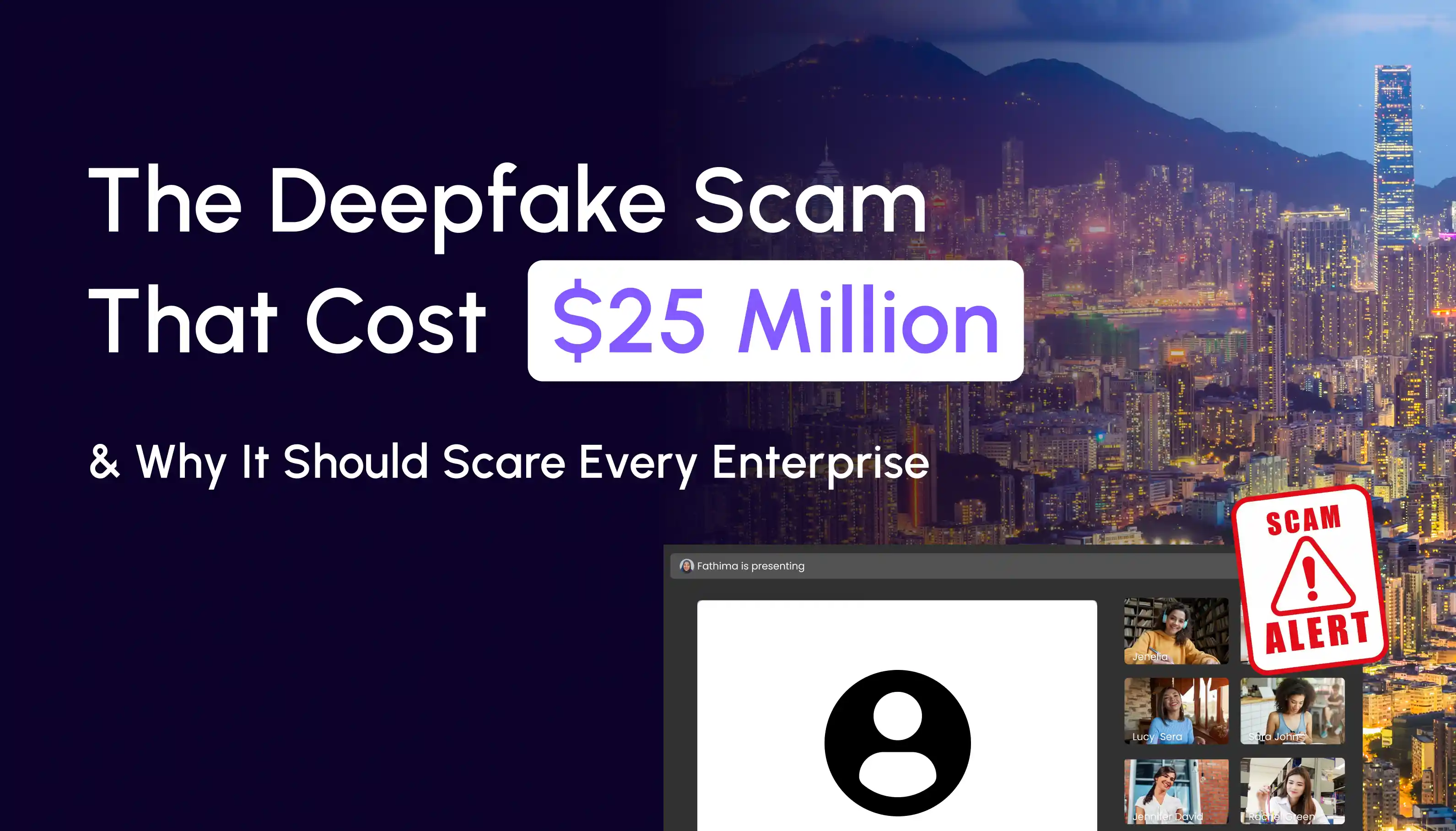
Earlier this year, a Hong Kong employee of a multinational corporation received what seemed like a routine email from her company’s Chief Financial Officer. The message asked her to join a video call to discuss an urgent financial transaction.
On the call, she saw the CFO and several familiar colleagues. They asked her to execute a series of confidential fund transfers totaling HK $200 million (about US $25 million). It was only days later that she learned the unthinkable: none of them were real.
The entire call was a sophisticated scam. The “participants” were AI-generated deepfake avatars, created using old video footage. The attackers combined AI-generated media with social engineering, convincing the employee to ignore her doubts and believe what she saw.
This isn’t science fiction. It’s the new face of cybercrime—and it’s here now.
Why This Matters More Than Ever
This attack wasn’t just about money. It was about credibility, control, and trust—and it showed just how vulnerable businesses are to modern disinformation campaigns.
According to a recent Gartner report, only 5% of enterprises currently use products to counter disinformation. But the threat is escalating so rapidly that by 2028, 50% of organizations are expected to deploy dedicated disinformation security tools.
Companies that don’t act now risk financial loss, reputational harm, and long-term erosion of stakeholder trust.
The Industry Challenge: Impersonation at Scale
For years, attackers relied on spoofed emails or hacked inboxes to impersonate executives and trick employees. But with the rise of GenAI, the landscape has shifted.
- Create lifelike fake video personas using existing public footage
- Build convincing social media profiles of CEOs or CFOs across platforms the executive doesn’t even use
- Scan digital trails to mirror tone, behavior, and context so the deception feels authentic
- Push misinformation campaigns across networks before the organization even realizes what’s happening
They don’t stop at financial fraud. The same techniques can be used to:
- Request confidential company data
- Ask for access credentials under false pretenses
- Mislead customers with fake executive announcements
- Discredit competitors or manipulate internal narratives
All of this is amplified by lack of visibility. Most companies can’t monitor every social platform or external app their executives might be mimicked on. As a result, threats go undetected until the damage is already done.
How PurpleHunt Helps Organizations Fight Back
At PurpleHunt, we understand that executive impersonation isn’t just a brand problem—it’s a security, compliance, and reputational crisis. And traditional detection methods are no longer enough.
Here’s how we help organizations stay ahead of modern threats:
Continuous Monitoring Across Platforms
We scan public platforms, social media, and digital channels for signs of executive impersonation—flagging fake profiles before they can cause damage.
Intent-Based Threat Intelligence
Our AI goes beyond surface-level matches, analyzing behavior and context to identify impersonation attempts aimed at fraud, misinformation, or corporate espionage.
Real-Time Alerts & Takedown Support
When suspicious activity is detected, we alert your security team immediately and assist with reporting and removing fraudulent profiles.
Integrated Compliance & Risk Mitigation
We help organizations maintain compliance with regulations like GDPR and PCI DSS, while integrating smoothly with legal, communications, and cybersecurity response teams.
24/7 Expert Support
Our dedicated security experts are available around the clock to respond to threats, guide your team, and help you navigate emerging risks.
In today’s threat landscape, protecting your executives is protecting your organization. PurpleHunt gives you the visibility, speed, and intelligence to do just that.
Conclusion: Protect What (and Who) Matters Most
The Hong Kong deepfake scam isn’t an isolated event—it’s a warning. Disinformation is now a business risk, not just a PR issue. And executive impersonation is one of its most dangerous forms.
Every organization needs to think bigger: not just about passwords and phishing emails, but about identity, authenticity, and trust in a world where seeing is no longer believing.
PurpleHunt helps you stay ahead. Because when your executives become targets, the right response can make all the difference.